India's economy grew 6.1 per cent in the fourth quarter of 2022-23, pushing up the annual growth rate to 7.2 per cent, official data showed on Wednesday.

The Reserve Bank of India (RBI) Governor Sanjay Malhotra is now confronting the classic growth-inflation tradeoff, a situation exacerbated by the West Asia war, which threatens to end the 'goldilocks period' of low inflation and robust growth.

India's GDP growth for the current fiscal is expected to slow down to 4.8 per cent, a UN report has said, warning that the Covid-19 pandemic is expected to result in significant adverse economic impacts globally. The UN 'Economic and Social Survey of Asia and the Pacific (ESCAP) 2020: Towards sustainable economies' said that Covid-19 is having far-reaching economic and social consequences for the region, with strong cross-border spillover effects through trade, tourism and financial linkages.

Capex, infrastructure development, and prudent fiscal management are the key focus areas in the Budget, says Nilesh Shah.

New completions in India's office real estate sector fell by 36 per cent to 9.7 million square feet in Q1 2026, the lowest in four quarters, primarily due to developers adopting a cautious stance amid global uncertainties, particularly in Bengaluru, Hyderabad, and Mumbai. Despite this, office absorption increased by 20 per cent, indicating strong occupier demand.

'If the war continue for a longer period of time, it is just a matter of time before the government will pass on some of the price increases.'

India's real gross domestic product (GDP) is likely to grow at 7.5 per cent in FY26 and moderate to 7 per cent in the subsequent fiscal year, a domestic rating agency said on Wednesday.
One of the major contributors for the decline in growth will be the monsoon deficiency, which also affects non- agricultural sectors through demand effects, RBI report said.

India achieved a current account surplus of USD 7.1 billion, or 0.7 per cent of GDP, in the January-March quarter of 2025-26, primarily boosted by robust services exports and increased remittances from overseas Indians, according to recent Reserve Bank of India data.

The Reserve Bank's growth projection for next financial year is lower than 8-8.5 per cent projected by the finance ministry in the recent Economic Survey which was tabled in Parliament on January 31. Unveiling the bi-monthly policy, RBI governor Shaktikanta Das said, "Recovery in domestic economic activity is yet to be broad-based, as private consumption and contact-intensive services remain below pre-pandemic levels."

The Indian government has approved the introduction of one billion polymer banknotes in Rs 10 and Rs 20 denominations for field trials, aiming to enhance durability. This move comes as the Finance Minister also addressed Parliament on declining retail inflation, GST reforms, and other fiscal measures taken to support the economy and household consumption.

For FY 12 when growth is expected to slow down, "the downside risks relate mainly to the poor rainfall and to the performance of the global economy," the Centre for Monitoring Indian Economy (CMIE) said in its latest review of the country's economy.

The RBI said lead indicators point to continuing sluggishness in domestic economic activity in the first quarter of 2014-15.

Asian Development Bank (ADB) on Friday warned that India's limited crude oil reserves of about 100 million barrels - sufficient for only 40-45 days of consumption - leave the country particularly vulnerable to supply disruptions through the Strait of Hormuz amid the ongoing war in West Asia.

Government-estimated growth for 2008-09 is 7.1 per cent. However, as per RBI estimates, GDP growth would be around 6 per cent in 2009-10.
India's economy has bounced back amazingly from the Covid-19 pandemic and nationwide lockdown over the last one year, but it is not out of the woods yet, according to the World Bank, which in its latest report has predicted that the country's real GDP growth for fiscal year 21/22 could range from 7.5 to 12.5 per cent.

The size of the GDP in the second quarter of 2018-19 is estimated at Rs 33.98 lakh crore, as against Rs 31.72 lakh crore a year ago

Gold and silver are expected to remain volatile with a corrective bias as investors assess the latest flare-up in the US-Iran conflict, movements in crude oil prices, and inflation data, which could reshape expectations for global interest rates, according to analysts.

Following the Supreme Court's clean chit in the coal block allocation case, Congress leader Sonia Gandhi has lauded former Prime Minister Manmohan Singh's integrity and accountability, drawing a sharp contrast with the Narendra Modi government's operational style and alleged misuse of investigative agencies.

Here are the key numbers to watch out for in the Union Budget for 2025-26:
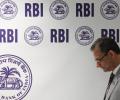
Uncertainties stemming from the West Asia crisis and its potential impact on inflation and economic growth were key factors in the Reserve Bank of India's Monetary Policy Committee (MPC) decision to maintain the status quo on interest rates, according to the recently released MPC meeting minutes.

Prime Minister Narendra Modi has urged states to balance the opportunities presented by artificial intelligence with the need to safeguard against social challenges like cyber fraud and drug abuse. He also warned of the risks posed by El Nino conditions, calling for stronger water conservation measures and emphasising the collective resolve towards a 'Viksit Bharat'.

Real GDP growth surprised on the upside in 2025, but weaker nominal growth, trade uncertainty, and soft demand signal a bumpier road ahead.

The report notes that equities had faced pressure from elevated valuation premiums, subdued nominal gross domestic product (GDP) and earnings growth, sustained foreign portfolio investor (FPI) selling, artificial intelligence (AI) infrastructure euphoria, and external shocks including US tariffs and a spike in crude oil prices due to geopolitical tensions in West Asia. However, several of these factors are now reversing.

The country's chief statistician T C A Anant on Wednesday said high global crude prices could impact India's economic growth in 2011-12 and projected that the GDP is likely to grow by around 8.5 per cent during the fiscal.

India's services sector growth rose to a two-month high of 58.5 in January, on faster expansion in new business intake and output, prompting service providers to hire additional staff, a monthly survey said on Wednesday.

India's household debt climbed to 41.3 per cent of gross domestic product (GDP) at the end of March 2025, marking a sustained rise from its five-year average of 38.3 per cent, with consumption-related loans accounting for bulk of the borrowings, the Reserve Bank of India (RBI) said in its Financial Stability Report.

Not a single retail outlet ran dry. Every household that wanted a cylinder got one. India faced neither a 1991 moment nor a 2013 one. Macroeconomic stability held. This was not an accident, and it was not luck alone. It was the work of a government that chose to act as it had during the pandemic -- deliberately and gradually, building one measure upon another rather than reaching for a single dramatic lever, explains V Anantha Nageswaran, chief economic advisor to the Government of India.

The Indian rupee depreciated by 32 paise to close at 92.83 against the US dollar, influenced by escalating global tensions, particularly the US-Iran conflict, and the deadline for the RBI's instructions to banks to curb overnight positions.
Global brokerage Bernstein has issued a cautionary note, stating that India risks 'under-delivering on its potential' unless it addresses key policy bottlenecks and structural risks, including employment challenges from AI, limited manufacturing gains, and rising welfare spending.
Demonetisation to result in short-run disruptions in cash-intensive sectors like retail, hotels, restaurants and transportation, RBI said while announcing the Monetary Policy

The July-September quarter GDP numbers are due on November 30.
Why would a country that requires close to $90 billion in net foreign capital annually to create jobs, build productive capacity, and sustain rapid growth permit $30 billion of capital to flow abroad, thereby contributing to pressure on the rupee? asks Debashis Basu.

Brokerage Bernstein has warned Prime Minister Narendra Modi that India risks squandering recent economic gains unless it accelerates structural reforms, particularly in jobs, manufacturing and innovation.

Indian GDP will grow at 8.5 per cent in 2021-22, and the rate will accelerate further to 9.8 per cent in 2022-23, a foreign brokerage said on Tuesday. The GDP had contracted by 7.3 per cent in the pandemic-hit FY21, and is widely expected to grow at a faster pace due to the base effect in 2021-22. The Reserve Bank of India (RBI) expects a 9.5 per cent growth in 2021-22, and the same to slow down to 7.8 per cent as things normalise.

Bharti Airtel added 7.64 trillion in value over the past five years, making it the biggest wealth creator in India's private sector, while the IT sector, including TCS, Infosys, and Wipro, collectively lost 8.5 trillion in value, according to the latest Burgundy Private Hurun India 500 report.
CMIE ups Indian 02-03 GDP growth forecast to 3.7%

Bank of Baroda economists project India's GDP to grow 6.5-6.8 per cent in FY27 but warn that the fiscal deficit could overshoot the budgeted 4.3 per cent target, potentially reaching 4.7-4.8 per cent of GDP due to subsidy overruns, excise duty cuts, and oil marketing company losses.

'It is not because of the war in West Asia, which began on February 28.' 'Petroleum product prices are already going through the roof. They are bound to have a serious inflationary impact.' 'A country's leadership is tested in trying times. It is here that the current leadership is failing.'
